Printing & technique
How many colours can you print on a golf ball?
The number of colours helps determine how your logo looks and what is technically possible on the small, curved surface of a golf ball. Here you will read how colour printing works and how to make your logo stand out best.
Printing in spot colours
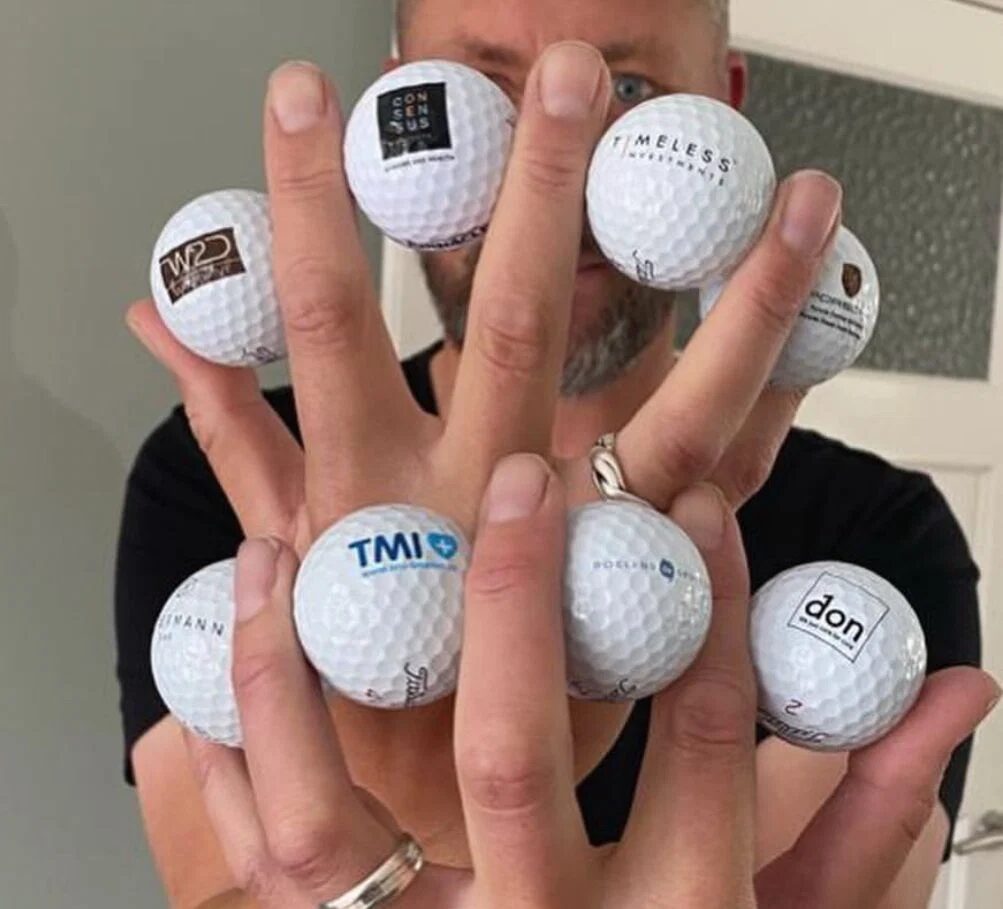
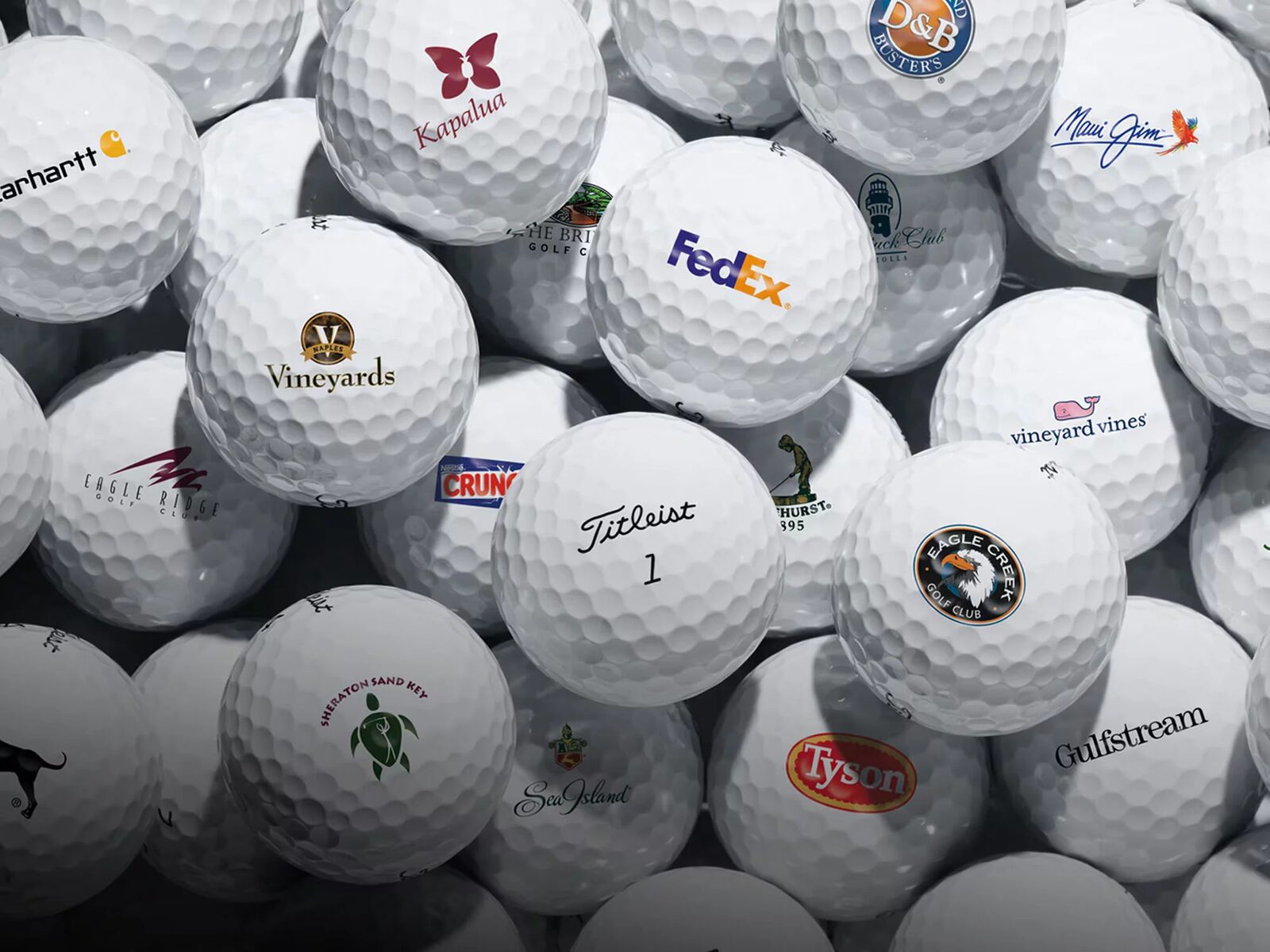
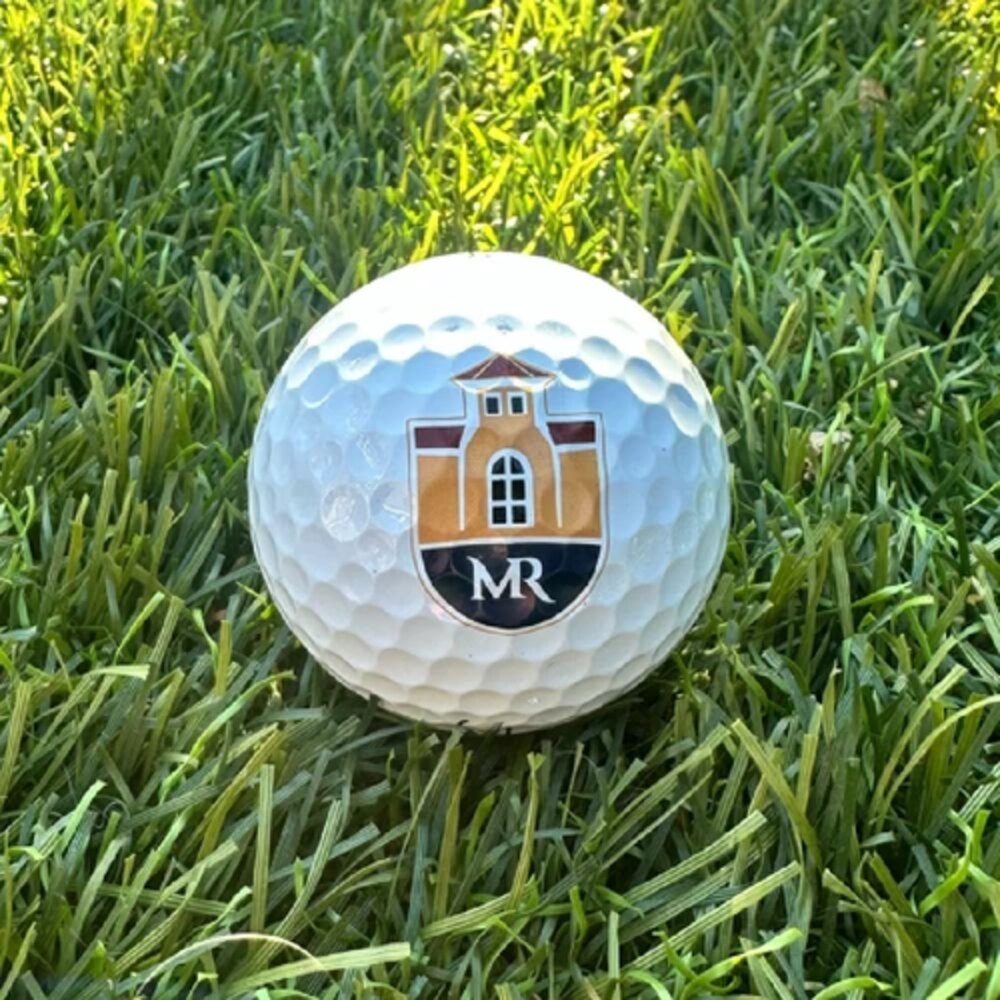
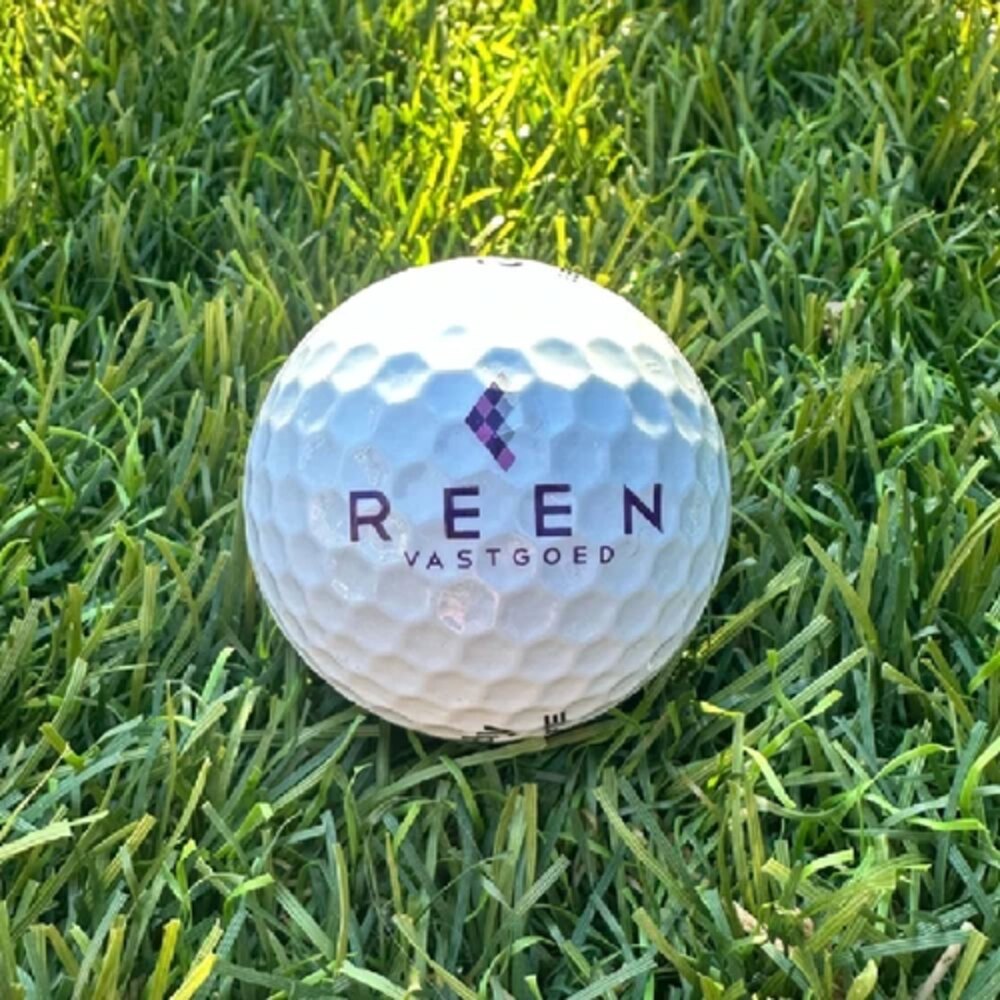
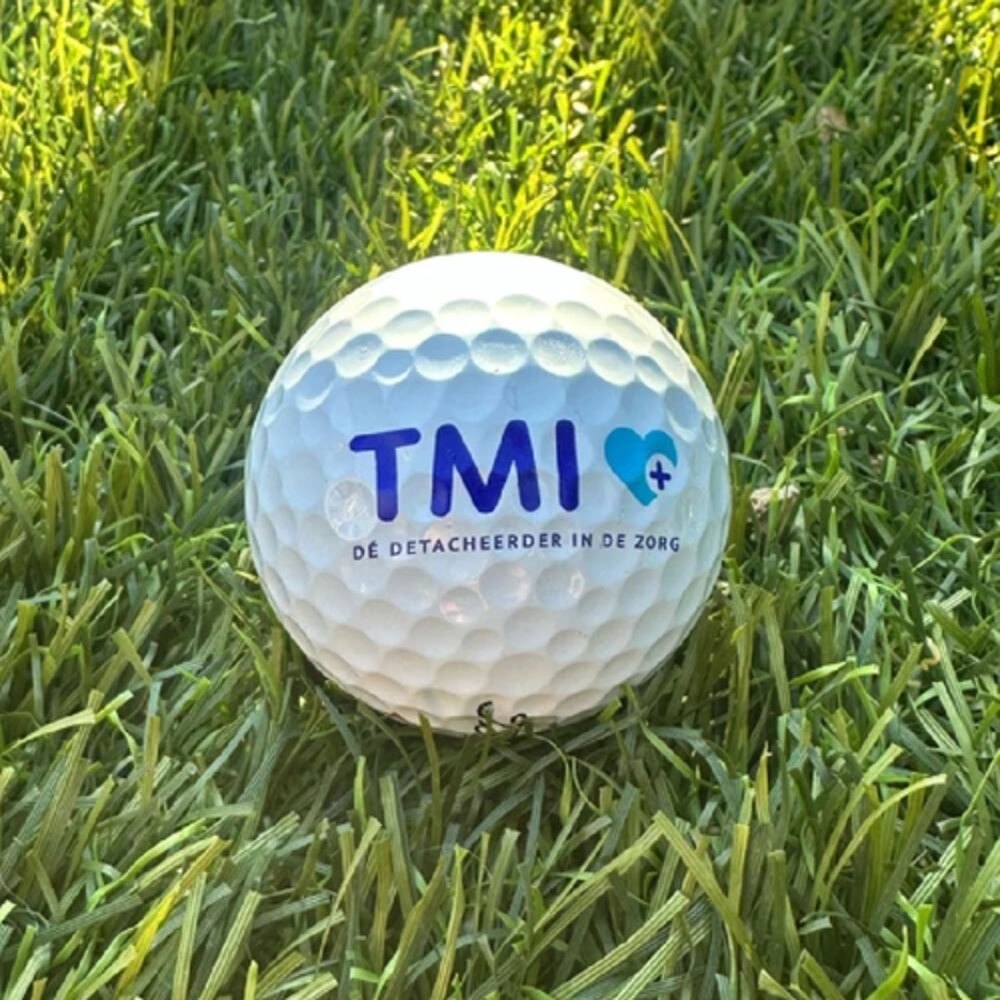
We print golf balls as standard in spot colours: bright, solid colours applied one at a time. Usually this means 1 to 5 colours. Each additional colour is a separate step in the process, so a logo with two or three bright colours is technically simpler — and often more attractive — than a design with lots of colour gradients.
Spot colour versus full colour
With spot colours you choose specific, well-defined colours (for example your two brand colours). Full colour or photo prints with gradients are trickier on a curved, small surface and not always available. Would you like to have a photo or a design with a gradient printed? Put it to us, and we will look together at what is possible.
How to make your logo stand out best
On a white golf ball, dark, high-contrast colours work best. Keep lines not too thin and text not too small. Not sure whether your logo is suitable? On the file supply page you will read how to prepare your file, and in the configurator you can choose the number of colours straight away.
Always a proof first
Whatever you choose: you will see the result in advance. You receive a digital proof showing the colours and position, and it only goes into production once you have given your approval.
Supply your colours as PMS values
A spot colour is mixed to a fixed recipe, and the most widely used reference for that is the PMS or Pantone system. So when you supply artwork, do not write "our dark blue" but give the actual PMS code. If you do not know it, it is almost certainly in the brand guidelines, or your brand designer can send it over in a single email.
If you supply only RGB or CMYK values, a conversion has to happen, and a conversion is never exact. Some of the vivid RGB colours a screen produces simply do not exist as printing ink. What comes closest in your case is then something we look at together. Supplying your logo covers how to prepare your file as vector artwork (EPS, AI or PDF).
Reducing a logo to fewer colours
Plenty of brand identities carry more colours than a golf ball needs. A logo using four shades on letterhead often looks calmer in two at 42 millimetres across. It is worth working out which colours genuinely distinguish the mark and which are only there as shadow, gradient or accent.
A practical step: replace subtle greys with a single line in the main colour, and let gradients go in favour of a flat area. Ask your brand designer whether a one-colour or two-colour version of the logo already exists. Most brand guidelines have one, precisely for applications like embroidery and pad printing.
How many colours are achievable in your case depends on the design and the model chosen; exact numbers come to you on request. Feel free to put your logo to us via contact and we will look at the simplification with you.
The ball colour counts as your background
On a white ball, white is not ink but the ball itself. That is an opportunity: a logo with a white cut-out in the middle can often be achieved without spending an extra print pass on it, provided the design is set up that way. It does not work in reverse: a white logo on a white ball is invisible and calls for a different ball colour or a reversed version.
Choose a coloured ball, a yellow or matt finish for instance, and all the contrast relationships shift. Dark blue on yellow works well; light grey on yellow does not. Which coloured models are available at any given moment and what can be printed on them depends on the range; check with Pinnacle golf ball printing or Titleist golf ball printing.
Judging colour on the proof
The digital proof shows the position, the size and the colour build-up of your design. One thing to keep in mind: you are judging that proof on a screen, and screens show colour with light rather than ink. A PMS colour therefore looks slightly different on your monitor from how it will look on the ball.
So on the proof, concentrate on what can be checked objectively: are the right PMS codes stated, is the spelling correct, is the balance between the elements right and is the logo in the position you want. For the colour itself, a physical PMS fan is more reliable than your screen. Once you approve, production starts and the lead time of 5 to 15 working days applies.
What extra colours mean for lead time and price
Every colour is a separate operation in the production process. More colours therefore means more steps per ball, and that feeds through into both the price and the time a run spends in production. On large quantities that difference counts for more than on a small run. The precise consequence comes with your quotation, which is prepared on request.
That is no reason to default to one colour. A two-colour logo that matches your brand identity is worth more than a cheaper one-colour version nobody recognises. It is sensible, though, to ask for both variants side by side before you decide.
If you are still weighing up model and print at the same time, start at golf ball printing or let the golf ball selector point you in a direction.